CASE STUDY 01 / AI GOVERNANCE
Decree®
A human-approval layer for agents that need to act in the real world.
- role
- Platform Engineering
- stack
- Go · Redis · React · LangGraph · Webhooks
- status
- MVP / CURRENT
- outcome
- One policy boundary for agent actions
01 / THE STAKE
When an AI agent can change real systems, “should it?” has to be answered before “can it?”
02 / REQUEST LIFECYCLE
One decision.
Four accountable steps.
- 01REQUEST
- 02POLICY ENGINE
- 03DECISION
- 04DELIVERY
An agent submits an action, with an idempotency key.
The policy engine evaluates it against versioned rules.
It’s allowed, sent for approval, or blocked.
A signed webhook delivers the decision, with an audit record.
03 / KEY DECISIONS
The architecture is
a set of trade-offs.
Centralize the policy boundary
Agents call one decision service before executing sensitive actions.
- TRADE-OFF
- This adds a network boundary that must remain fast and available.
- REJECTED
- Embedding separate policy logic inside every agent and workflow.
Make approval asynchronous
Approval is a first-class state rather than a process that blocks indefinitely.
- TRADE-OFF
- Callers must handle pending decisions and resumable execution.
- REJECTED
- Keeping an agent process open while a person decides.
Treat auditability as product data
Rules, decisions, and delivery attempts form a traceable record.
- TRADE-OFF
- The data model and retention strategy require more care.
- REJECTED
- Relying on application logs as the only history of a decision.
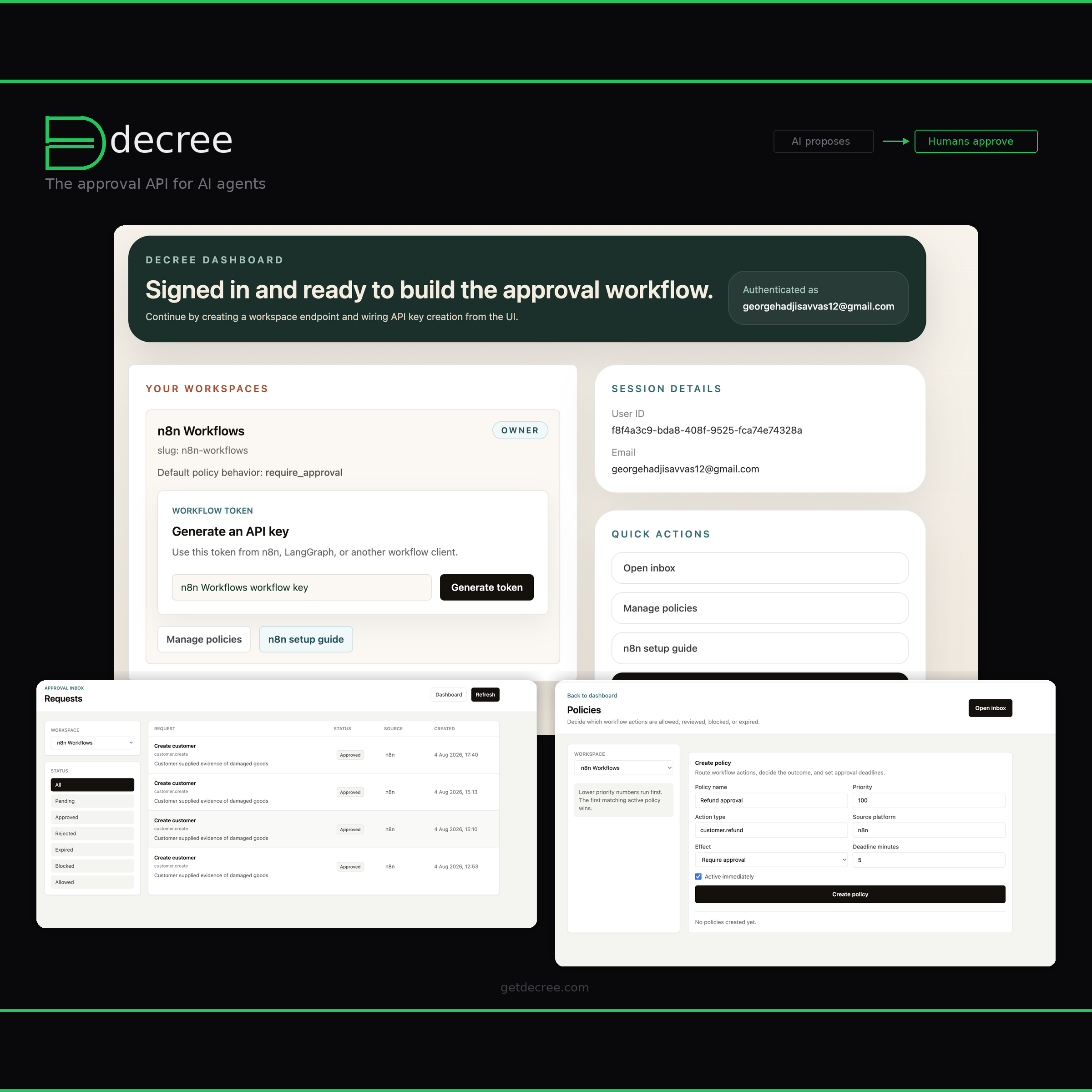
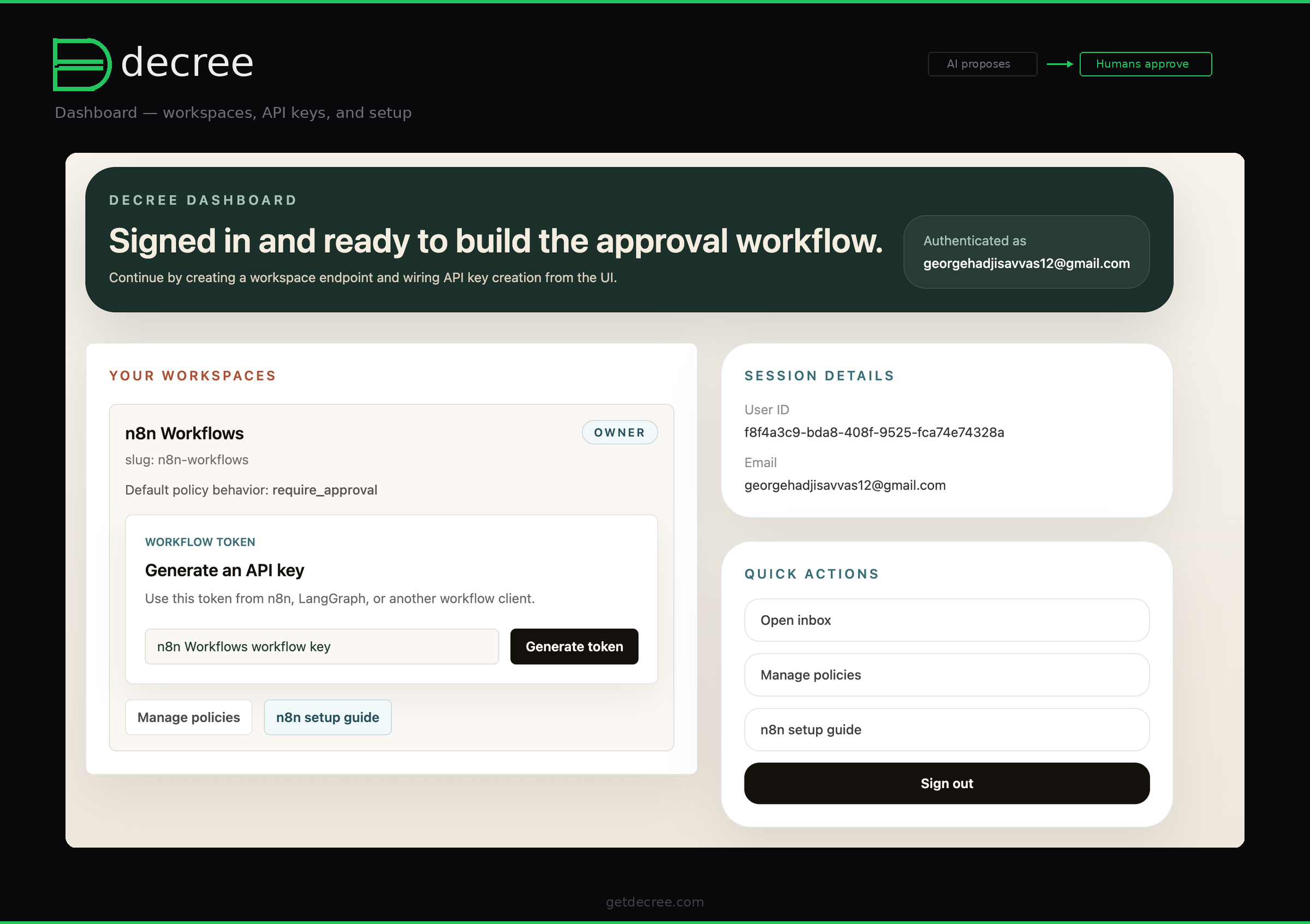
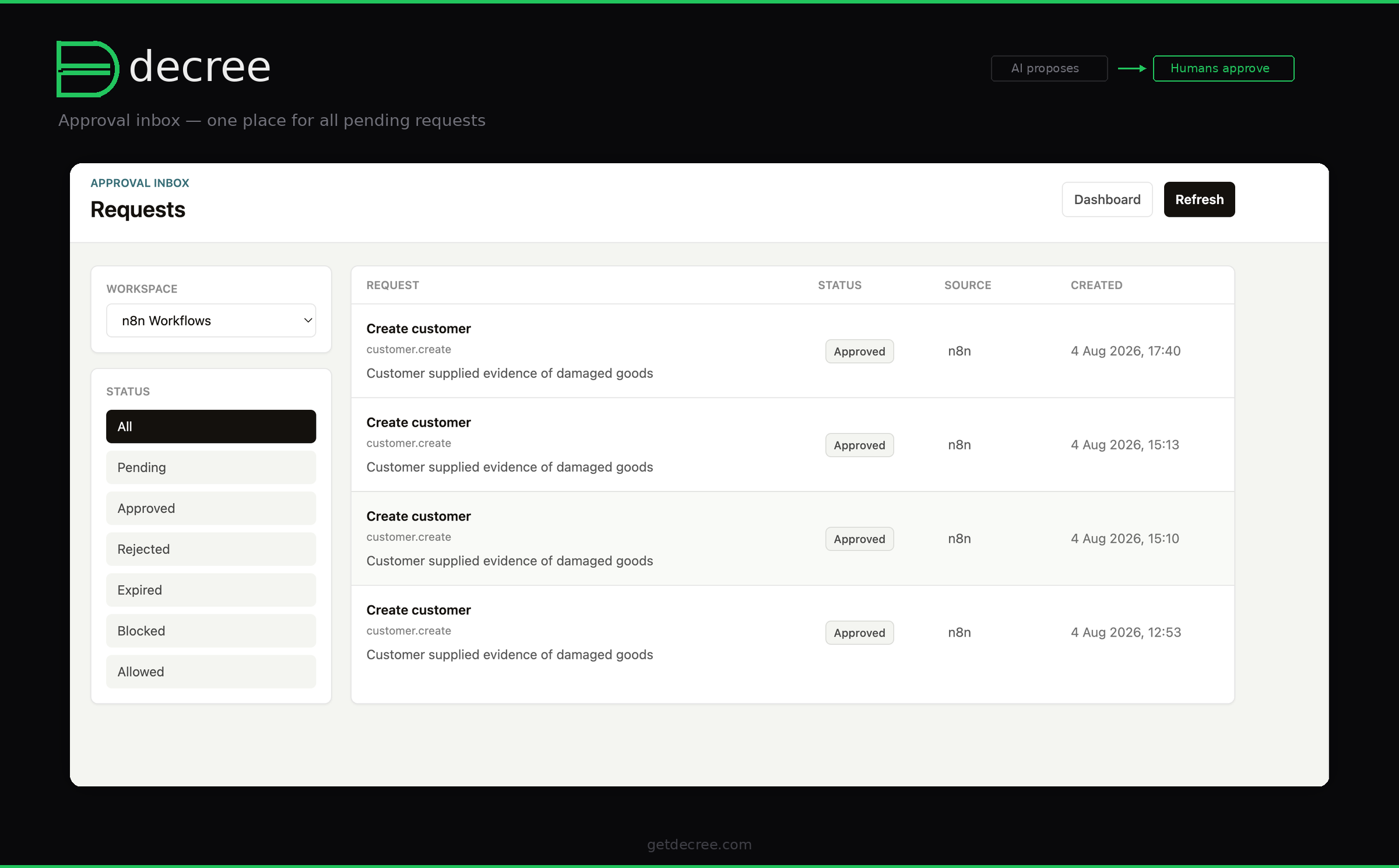
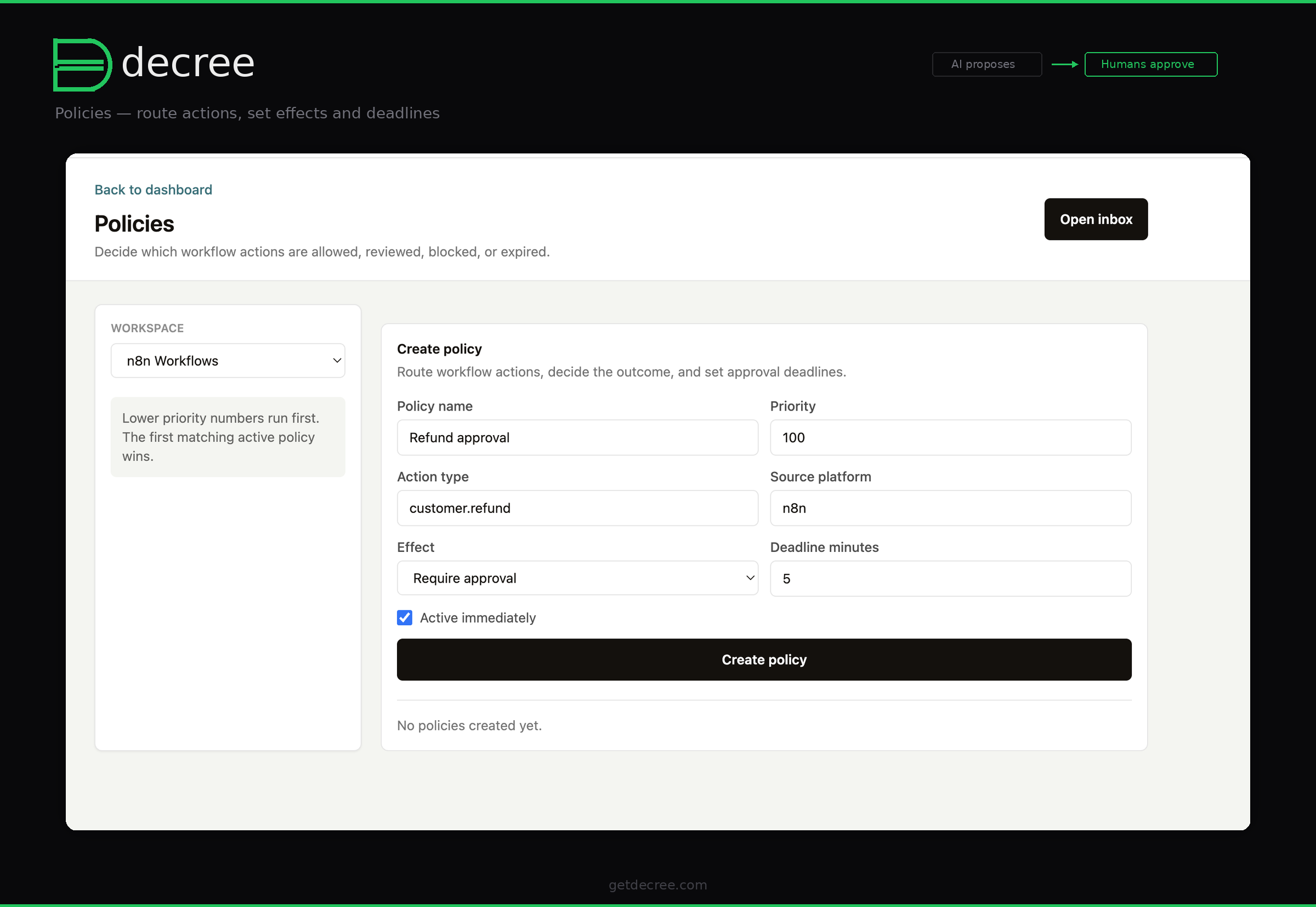
04 / THE INTERFACE
Complex decisions.
Calm surface.
Drag or scroll horizontally to inspect the product surfaces.
05 / RESULT
A single control point between intent and execution.
Decree gives agents and workflows one place to request a decision, involve a human when policy requires it, and retain the path from request to delivery.
WHAT I’D CHANGE
Make policy behavior observable earlier.
I’d invest sooner in policy simulation and decision explainability, so teams can test rule changes against representative actions before publishing a new version.
Demand Discovery